25 August 2009

Book Discussion: In the Eye of the Storm


In the Eye of the Storm: Swept to the Center by God

Wednesday, September 2, 2009

12:30p to 1:30p


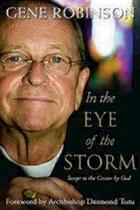
Come join your friends and co-workers and share your thoughts about In the Eye of the Storm: Swept to the Center by God by Gene Robinson, the Ninth Bishop of the Episcopal Diocese of New Hampshire and the first openly gay, non-celibate priest to be ordained a bishop in a major Christian denomination. In this book, he reflects on the controversy surrounding his election and what it has meant for the Episcopal Church, while also illuminating the faith that has animated his life and his work helping the poor, the marginalized and the disenfranchised. Bishop Robinson will also be presenting on obstacles to opportunity and prosperity in America at Momentum 2009, Tides’ annual gathering of forward-thinking activists, philanthropists, and social entrepreneurs. Learn more at www.momentumconference.org.


Please let John know at library@thoreau.org if you are interested in attending and/or if you need help finding a copy.


Note: You may bring your lunch to the discussion. Just be careful not to spill. Thanks.

Subject Guide: Momentum 2009


With Tides' Momentum 2009 conference around the corner (September 7-9), here are some books related to this year's plenary themes: Power, Capital, Carbon, Work, Rights, Conflict, and Connections. Filled with innovative ideas, inspiration, and trenchant analysis, they are just the thing to help you prepare for the conference or to help you stay informed on policy, progressive politics, and social justice.


Piven, Frances Fox, Lorraine Carol Minnite, and Margaret Groarke. Keeping Down the Black Vote: Race and the Demobilization of American Voters. New York: New Press, 2009.


The authors of this book examine the history of the powerful tendencies toward voter suppression in America's two-party political system, focusing on Republican Party and conservative movement efforts over the past twenty-five years to counter the mobilization of black voters. Where the obstacles to voting used to be obvious, today they are more subtle, using tactics such as felon disenfranchisement statues, burdensome voter identification laws, and tough rules on voter registration drives, all in the name of “election reform.” Finding such suppression alive and well in the 2008 election, they demonstrate the need today for an electoral process that is fair, simple, and transparent.


McKibben, Bill. Deep Economy: The Wealth of Communities and the Durable Future. New York: Times Books, 2007.


Are you local? The familiar, prevailing economic model that has held growth to be the primary goal is currently leading to increased inequality, insecurity, environmental degradation, unhappiness, and social isolation. McKibben presents the stories of pioneers pursuing alternatives based on local interdependence and the sustainable use of resources. It is an argument for a more humane economic approach based on rebuilding and reinvigorating local communities, thereby directly connecting people to other people and to the consequences of their actions.


Goodell, Jeff. Big Coal: The Dirty Secret Behind America's Energy Future. Boston: Mariner Book, Houghton Mifflin Co, 2007.


Roughly half of the electricity in America comes from coal, with the average American being responsible for consuming twenty pounds of the stuff a day, yet many are unaware of its centrality to our existence or the enormous influence the coal industry has on our politics and economy. Goodell traces the life cycle of this cheap, dirty, and carbon-intensive fossil fuel from deep underground, into the power grids, through the halls of government, and out into the atmosphere, revealing the costs and consequences of this addiction to the environment and to the health of individuals, families and communities.


Nahmias, Rick. The Migrant Project: Contemporary California Farm Workers. Albuquerque: University of New Mexico Press, 2008.


Poor, exploited, and marginalized, migrant farm workers are a vital part of California's and the country's agriculture economy. Rick Nahmias' photography documents the lives of these workers, showing the harsh conditions in which they are forced to live and work, but also reflecting their essential human dignity. In combination with oral histories and analytic essays, this collection tells the story of the struggle for respect and justice, and puts a human face on the hidden costs of feeding America.


Levy, Barry S., and Victor W. Sidel. Social Injustice and Public Health. Oxford: Oxford University Press, 2009.


This wide-ranging collection represents a comprehensive approach to understanding the adverse impacts of social injustice on public health, examining its effects on different population groups and in different areas of health including infectious diseases, mental health, nutrition, and assaultive violence. It is also a call to action, presenting ways to respond to the root causes of social injustice and to ensure that all people have the increased opportunity to meet their basic human needs through access to medical knowledge, tools, and resources.


Glenny, Misha. McMafia: A Journey Through the Global Criminal Underworld. New York: Knopf Books, 2008.


The chaos left behind by the collapse of the Soviet Union in conjunction with the opportunistic deregulation of international financial markets brought with them the dramatic growth of transnational organized crime and the global shadow economy, which now accounts for an estimated twenty percent of world GDP. Chronicling the rise and activities of this globalized underworld, including the Russian mafia, Colombian drug cartels, Japanese yakuza, and Chinese labor smugglers, Glenny presents a detailed picture of how they feed off of the vulnerability of the poor to satisfy the material demands of the affluent in the West, creating a breeding ground for violence and insecurity.


Hamm, Theodore. The New Blue Media: How Michael Moore, MoveOn.Org, Jon Stewart and Company Are Transforming Progressive Politics. New York: New Press, 2008.


Including the Onion, Air America, Michael Moore, MoveOn, Daily Kos and the Blogosphere, The Daily Show, and The Colbert Report, this book chronicles the history of today's progressive media in America with a particular focus on their growth during the Bush years. Examining their use of satire, didactics, activism, and new technologies, Hamm argues that despite a mixed record of success they have changed the presentation and direction of contemporary progressive politics, with Stephen Colbert providing “the most sophisticated critique mustered by the New Blue Media.”

17 July 2009

Subject Guide: California


Defined as much by its mythology as by its geography, California is a place of rich human variety, spectacular natural beauty, historical extremes, and complex political contradictions. Learn more about your home state, its history, and the difficult issues it faces today with the books in this subject guide, which represent just a few of the ones about California available in the library's collection. Visit the catalog at library.thoreau.org to find more, and remember that we will having a discussion in the library about one of the books on this list - Rand Richard's Mud, Blood, and Gold - next Wednesday, July 22, from 12:30pm to 1:30pm.


Kevin Starr. California: A History. (2005)

Author of the sweeping eight volume historical study, California and the American Dream, and former state librarian, Kevin Starr in thirteen chapters chronicles California's history from the arrival of Europeans in the sixteenth century to 2005. Surveying the full sweep of geological, economic, political, cultural, and technological forces that have shaped the state, he emphasizes key themes of diversity, mythmaking, and innovation. It is also an examination of the paradoxical relationship between the state's veneration of nature and its rapacious consumption of it, how California became such a representative American place, and the question "Is California governable?"

John McPhee. Assembling California. (1993)

Rivaling the diversity of its population, the geology of California is a uniquely complex story of shifting geometries in continual motion. Part science, part biography, part travel narrative, McPhee explores
the state with geologist Eldridge Moors while explaining the geological dynamics that have pieced together the state and shaped its familiar features for hundreds of millions of years. Illustrating how these forces have directly affected human development, he also discusses the gold rush, vinicultural diversity, and the 1989 Loma Prieta earthquake.

Brian Fagan. Before California: An Archeologist Looks at Our Earliest Inhabitants. (2003).

Long before there was a state called California, the land it occupies was home to a diverse array of societies and cultures, including some of the highest linguistic diversity every recorded on the planet. Written for a general audience, this book is a survey of the lives of these native peoples from the earliest human settlement over 13,000 years ago to the arrival of Europeans, as based on interpretations of the archaeological record. Acknowledging that many questions remain to be answered, Fagan addresses a wide range of topics, including human travel and migration patterns, the changing availability of different food resources, the effects of alterations in the ecology of the coast and inland regions, and detailed explorations of specific geographic regions.

Peter Asmus. Introduction to Energy in California. (2009)

From the University of California Press' California Natural History Guides series, this book is a comprehensive and accessible reference guide to all aspects of energy in the state, with over a hundred photographs, illustrations, and maps. Beginning with an historical overview of energy development in California, it also examines the pros and cons of all existing energy sources, including alternative and renewable ones, and describes the numerous challenges facing the state today in this sector along with some potential solutions for a more sustainable future. With an afterword by Arthur O' Donnell, executive director of the Center for Resource Solutions.

Linda & Wayne Bonnett. Taber: A Photographic Legacy, 1870-1900. (2004)


This survey features over 200 photographs of California and San Francisco taken by Isaiah West Taber (1830-1912), one of the most famous, talented, and prolific photographers of the state in his day, with a genius for self-promotion needed to thrive in the competitive world of nineteenth century portraiture. Documenting views of a world now lost, it includes images of Chinatown, the mansions of Nob Hill, Sutro Heights, the 1894 Midwinter Fair, Yosemite Valley, and individual portraits of famous Californians. It also presents the story of West himself, from his arrival during the gold rush to the 1906 earthquake when all of his glass negatives were lost.

Rand Richards. Mud, Blood, and Gold: San Francisco in 1849. (2009)

By the author of Historic San Francisco (also in the library collection), this work presents a detailed account of San Francisco in the year when its population exploded as tens of thousands of people from around the world poured through on their way to get rich in the newly discovered gold fields of California. From eyewitness accounts of that tumultuous year, Richards creates a vivid picture of daily life filled with drinking, gambling, prostitution, violence, real estate speculation, government corruption, and boundless ambition. Strained to the breaking point, the town was transformed into a city in ways that echo to today.

08 July 2009

Brown Bag: Clean Energy Advancement & Global Warming Reversal

Brown Bag: Clean Energy Advancement + Global Warming Reversal
Presenter: Center for Resource Solutions Policy Director Chris Busch
Thursday, July 16, 12:30PM to 1:30PM
Atlantic Room at Tides

This presentation will provide insights into the current climate and energy policy landscape. We will look in some detail at the American Climate and Energy Security Act, which has been advancing in the House of Representatives. The bill, crafted by House Energy and Commerce Committee Chair Henry Waxman and his Environmental Subcommittee Chair Ed Markey, includes an array of policy initiatives. Chris will touch on some of the specifics to the energy-sector and will seek to demystify the multi-sector cap-and-trade program that is intended to ensure declining greenhouse gas emissions for the economy as a whole. The presentation will also touch on other recent federal policy developments, as well as regional and state action.

26 June 2009

Some New Books


A brief look at some of the new additions to the collection:

Donald Kennedy, ed. & the editors of Science magazine. Science Magazine's State of the Planet 2008-2009. (2008)

Collecting articles dedicated to energy, climate, and sustainability.

Gary Paul Nabhan. Where Our Food Comes From: Retracing Nikolay Vavilov's Quest to End Famine. (2009)

Examining the links between climate change, free trade, genetic engineering, loss of traditional knowledge, and threats to our food supply.

Martha Honey. Ecotourism and Sustainable Development. (2008)

A comprehensive overview of ecotourism around the world today.

Richard L. Knight & Courtney White. Conservation for a New Generation. (2009)

A study of alternative, community-based approaches to land conservation.

17 June 2009

Book Discussion - Mud, Blood, and Gold


Wednesday, July 22
12:30 to 1:30
In the library


Come join your friends and co-workers and share your thoughts about Mud, Blood, and Gold: San Francisco in 1849 by local historian Rand Richards. In 1849, the population of the small port town of San Francisco exploded as tens of thousands of people from around the world poured through it on their way to get rich in the recently discovered gold fields of California. Some succeeded, many failed. From eyewitness accounts of that tumultuous year, Richards creates a vivid picture of daily life filled with drinking, gambling, prostitution, violence, real estate speculation, and government corruption. Strained to the breaking point, the city was transformed in ways that echo to today.


Please let us know at library@thoreau.org if you are interested in attending and/or if you need help finding a copy.


(And yes, since we are doing this at lunch time, you will be allowed to eat in the library - just be careful around the couch)


From the publisher:
San Francisco in 1849 was a time and place like no other in American history. As word of the discovery of gold in California spread, people from all over the world descended on San Francisco--ground zero for the avalanche of humanity and goods pouring into the fabled El Dorado. There have been many books on the Gold Rush, but Mud, Blood, and Gold is the first to focus solely on San Francisco as it was at the peak of the gold frenzy. With a 'you are there' immediacy author Rand Richards vividly brings to life what San Francisco was like during the landmark year of 1849. Based on eyewitness accounts and previously overlooked official records, Richards chronicles the explosive growth of a wide-open town rife with violence, gambling, and prostitution, all of it fueled by unbridled greed.

This Thursday: Art + Wine + Song


Elemental
Emily Clawson, Jenny E. Balisle, and Mari Andrews

Opening Reception:

Thursday, June 18, 5:00PM to 7:00PM

Thoreau Gallery


Elemental
, presenting artwork by Emily Clawson, Jenny E. Balisle, and Mari Andrews - three Bay Area artists whose work is inspired, in part, by simplicity and nature. With drawings, paintings and sculpture these artists have planned an exhibition hoping to engage your mind and tickle your fancy. It runs from June 18 to August 14.

Special musical performance by Erica Dreisbach of Social Venture Network. Hear Erica's music:
http://www.myspace.com/ericadreisbach