12 February 2010

Thoreau Center Brown Bag: Simplicity: A Holistic Approach to Fulfillment

Free Seminar - Simplicity: A Holistic Approach to Fulfillment
Presenter: Laura Edwards, Simplicity Consultant
Wednesday, February 17, 12:30p to 1:30p
Pacific Room at Tides

At the heart of the Simplicity Movement is the desire to reorient our lives away from the minutiae of modern life and create space for simple pleasures. Rather than just continually organizing stuff, we are seeking to shift the entire approach to how we acquire, receive and experience the people, places and things in our life. This workshop is designed to give you tangible steps to begin phasing in room for peace. We will cover:
  • Acquiring things and experiences and how to manage the inflow
  • Letting go, purging, and organizing necessities
  • The three traps of modern life and how to eliminate them
"As you simplify your life, the laws of the universe will be simpler; solitude will not be solitude, poverty will not be poverty, nor weakness weakness." --Henry David Thoreau

10 February 2010

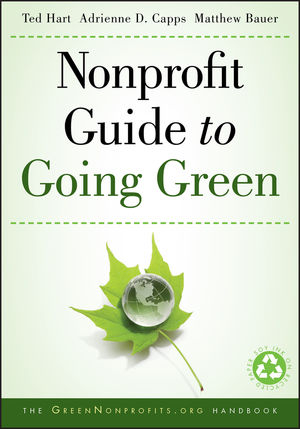
Book Release Event: Nonprofit Guide to Going Green


When: Thursday, March 04, 2010
5:00 PM-7:00 PM

Where: Thoreau Center for Sustainability
1014 Torney Avenue

Pacific Room at Tides

San Francisco, CA 94129


The Thoreau Center for Sustainability is hosting a national book release event
. Following two years of research and planning, the guide to going green on a charity budget is set for release. Timely and clearly written, with contributions from experts around the globe, Nonprofit Guide To Going Green offers practical advice on how non-profits of any size can green their own organization, even on a limited budget. Join us in San Francisco, CA, March 4, 2010. Discussion and reception begins at 5:00PM.

From the publisher:


The definitive, practical, go-to resource guide on helping all charities become more "green"

Nonprofit Guide to Going Green is your comprehensive learning tool to guide nonprofits and NGOs towards becoming greener. A desktop reference for any charitable organization to become greener, this essential book gives your organization the support it needs to take proactive steps to protect the environment while fulfilling its mission.


  • Helps nonprofits green their efforts and carbon footprint
  • Shows CEOs, presidents, deans, marketing officers, board members proactive steps they can take to protect the environment
  • Teaches how to do a self-audit and plan for a more environmentally sensitive future

Nonprofit Guide to Going Green delivers a timely and essential call to action for this new century. Can your organization afford not to "go green?"

08 February 2010

Thoreau Center Workshop: Getting the Results You Want Starts with Effective Communication

Free Workshop: Getting the Results You Want Starts with Effective Communication
Presenter: Nikki Anderson, President, ThinkFeelKnow

Wednesday, February 10, 12:30p to 1:30p

Pacific Room at Tides


Your ability to get what you want depends on your ability to speak clearly, listen accurately, and assert yourself with confidence. Developing powerful methods of sharing information - whether it's reading, writing, speaking, or listening - will improve your relationships, garner more respect from others, and provide higher levels of personal satisfaction.


During this interactive discussion you will


* Learn 3 simple techniques for communicating with more confidence

* Understand how to overcome your communication blocks

* Gain new insights on how to manage conflict, misunderstandings and hard to manage teams


Join Executive Coach Nikki Anderson in this lively discussion as she shares practical ways to effectively communicate in all areas of your life.

02 February 2010

Thoreau Center Brown Bag: Man Up’s Youth Movement to End Violence

Man Up’s Youth Movement to End Violence

Presenter: Jimmie Briggs, Executive Director, Co-Founder


Thursday, February, 4, 12:30p to 1:30p


Pacific Room at Tides


Man Up is an international campaign to activate youth in a movement to stop violence against women and girls. Man Up’s call to action challenges the next generation to "man up" -- whether they are male or female -- and declare that violence against women and girls must end. Harnessing the universal power of music, sport and technology, Man Up provides innovative training, resources and support to young leaders and the human rights organizations that collaborate with them.

Jimmie Briggs, Co-Founder (Executive Director), will explain the origins and vision of Man Up and describe its unique campaign integrating hip hop, sports and technology to draw attention to youth about the need to end violence against women and girls.


Man Up is the brainchild of Jimmie Briggs, acclaimed writer, teacher and journalist. Over the last decade, Jimmie has earned his reputation as one of the most respected humans rights advocates in the field of journalism. His work has appeared in The New York Times Magazine, The Washington Post, LIFE, Vibe, Outside, and Fortune. His courageous reporting on child soldiers and the lives of war-affected children is seen in a wide array of publications such as The Nation, The Village Voice, The Source, El Pais, People, Essence among others. A National Magazine Award finalist and recipient of honors from the Open Society Institute, National Association of Black Journalists, Alicia Patterson Foundation and Carter Center, among others, his book on child soldiers and war-affected children, Innocents Lost: When Child Soldiers Go To War won him accolades in 2005. Briggs has worked for the UN Special Session on Children, Seeds of Peace in both New York City and Kabul, Afghanistan, as well as numerous other organizations including Oxfam, Amnesty International and the ENOUGH Project. He has received distinguished fellowships for his writing and advocacy. Additionally, he has served as an adjunct professor of investigative journalism at the New School for Social Research, and was a George A. Miller Visiting Professor in the Department of African and African-American Studies at the University of Illinois: Champaign-Urbana. His upcoming book, The Wars Women Fight: Dispatches from A Father to His Daughter, will be published in 2010. When asked why he chose to spearhead this initiative, he simply says, "For my daughter. I want a better world for her."


To learn more, contact Bruce DeMartini at bruce@thoreau.org

Brown Bag events are free informal mid-day learning sessions hosted at Tides. Friends, neighbors and colleagues are welcome. Visitors, please sign in at the front desk.

27 January 2010

Subject Guide: Biodiversity


The United Nations has declared 2010 to be the International Year of Biodiversity: “a celebration of life on earth and of the value of biodiversity for our lives.” Its goal is to raise global awareness of the rich variety of life on Earth, the complex relations among living things and their environments, and the role biodiversity plays in sustaining the systems upon which all life, including humanity, depends. Biodiversity plays a crucial role in services including purifying air and water, detoxifying waste, stabilizing climate, moderating floods, renewing soil fertility, and ensuring that life has the ability to adapt to change. This complex combination of life forms and their interactions with each other and the environment makes Earth a uniquely habitable place. But human activity, especially the destruction of habitats resulting from the expansion of populations and development, is causing diversity to be lost at an accelerated rate. Estimates are that species are becoming extinct at a thousand times the natural rate, and once gone, such losses are irreversible. The International Year of Biodiversity is an opportunity to highlight the achievements that have been made in conserving biodiversity and to focus on the urgency of the problem.

Part of the challenge is that biodiversity is a complex, scientific subject. Different definitions exist, and new knowledge is added to our understanding of the concept every day. People are also constantly testing new strategies to conserve diversity. Here are some books from the library collection that are useful introductions, and we have others if you really want to dig into the science and the practices of conservation. While complex, at heart, biodiversity is about the amazing and sometimes surprising connections between you and the world around you.

E.O. Wilson. The Future of Life. (2002)
Harvard biologist and Pulitzer Prize winner Edward Wilson draws on two decades of research on biological diversity to describe vividly the richness of our biosphere and the damage humankind has caused and increasingly continues to cause to it. Emphasizing the need to understand fully the biodiversity of our planet and the value of the ecosystem services it supports, as well as making the case to adopt a global land ethic, he proposes a variety of strategies that seek common ground between economic progress and conservation. Although the challenges are large, he is ultimately optimistic that Earth's living history can be preserved.

Yvonne Baskin. The Work of Nature: How the Diversity of Life Sustains Us. (1997)
“How many species can be lost before the ecological systems that nurture life begin to break down?” While not always readily obvious, the complex relationships of biodiversity are crucial to maintaining the basic life support systems of our planet in the ways they provide clean air, pure water, and fertile soils, among other things. Science journalist Yvonne Basking surveys the work of leading ecologists and explains clearly the practical consequences of biodiversity loss for the health, stability, and functioning of ecosystems, as well as the extraordinary challenges involved in ecological restoration.

Niles Eldredge.
Life in the Balance: Humanity and the Biodiversity Crisis. (1998)
Paleontologist and Curator in the Department of Invertebrates at the American Museum of Natural History, Niles Eldredge brings an evolutionary perspective to the present-day biodiversity crisis in which the yearly loss of species is approaching the scale of the mass global extinctions of the distant past. Written for a general audience, he focuses on four questions: “What is biodiversity?”, “Why should we care about biodiversity?”, “What threatens biodiversity?”, and “What can we do?” An appendix listing animal species that have become extinct since 1600 is a sobering indicator of how human activity had radically transformed the ecosystems of the planet.

E.O. Wilson & Frances M. Peter, eds.
Biodiversity. (1988)
This book collects papers from the National Forum on BioDiverstiy, held in Washington, D.C., on September 21-24, 1986, under the auspices of the National Academy of Sciences and Smithsonian Institution. The forum featured over 60 leading biologists, economists, agricultural experts, philosophers, representatives of assistance and lending agencies, and other professionals, and it did much to popularize the concept. It is a comprehensive overview of the science, still relevant today, and an urgent warning about the rapid alteration and destruction of the environments that have fostered the diversity of life forms on the planet for more than a billion years.


Bruce A. Stein, Lynn S. Kutner, & Jonathan S. Adams, eds.
Precious Heritage: The Status of Biodiversity in the United States. (2000)
This work is a joint project of The Nature Conservancy, the Association for Biodiversity Information, and natural heritage programs in all fifty states, collecting together for the first time ever over twenty-five years of research and information gathered by state biodiversity inventories. With over 200,000 species of animals, plants, and microbes, the United States is biologically rich and has the most diverse flora and fauna of any largely temperate zone nation. However, up to one-third of these species are at risk and more than 500 have already disappeared, largely as a result of habitat destruction. To address these threats, the authors review the fundamental strategies underlying most biodiversity conservation efforts and suggest a blueprint for the future.


Jack Ahearn, Elizabeth Leduc, and Mary Lee York. Biodiversity Planning and Design: Sustainable Practices. (2006)
This work explores the role of landscape architects and planners in influencing land use decisions for the promotion of biodiversity conservation, particularly with regard to minimizing habitat loss and degradation. Drawing on a wide range of case studies from around the United States, the authors examine the issues, concepts, and methods involved, and illustrate how an interdisciplinary approach led by planners and designers working with conservation biologists, restoration ecologists, and natural and social scientists can advance sustainable practices.

Thoreau Center Brown Bag: Demos.org, Ideas + Action


When: Thursday, January 28, 12:30pm – 1:30pm
Where: 1014 Torney Ave, Pacific Room at Tides, Presidio, SF
Presenter: Carol Villano

Demos is a non-partisan public policy research and advocacy organization founded in 2000. Headquartered in New York City, Demos works with advocates and policymakers around the country in pursuit of four overarching goals:

• a more equitable economy with widely shared prosperity and opportunity;
• a vibrant and inclusive democracy with high levels of voting and civic engagement;
• an empowered public sector that works for the common good;
• and responsible U.S. engagement in an interdependent world.

Carol will give a brief overview of Demos’ programs, talk about some of the latest projects they’re working on in each program, and spend some time focusing on their work in California helping to reframe the debate on the role of government and California’s fiscal crisis.

07 December 2009

New Books - December 2009

This month we are highlighting a few of the books that generous donors have added to the library collection in the past few months covering a variety of topics including climate change, multicultural history, green design, Web 2.0, genetic engineering, industrial agriculture, and the distribution of wealth. Join us at the Thoreau Center Craft Fair on Wednesday, December 9 from 11:30 to 1:30. Purchase a delicious homemade brownie and your donation will help us provide more library resources to serve your interests. And, if you have books sitting around your office or at home that you’d like to donate to the library, please do. The library can help circulate and share such resources with our Thoreau Center community.

Orrin H. Pilkey & Rob Young. The Rising Sea. (2009)


Geologists Orrin H. Pilkey and Rob Young examine the causes and effects of vanishing glaciers, melting ice sheets, rising sea levels, and retreating shorelines worldwide. While not immediately perceptible to all today, global warming is currently altering coastal environments and their human and biological communities, and scientists anticipate that its impacts on our densely developed shorelines will only become more catastrophic in the decades to come. The authors make the case for taking a long-term view and making the hard choices now needed to shape development in a direction more in harmony with nature.


Ronald Takaki. A Different Mirror: A History of Multicultural America (Revised Edition). (2008)


The revised edition of Ronald Takaki's landmark study of the making of multicultural America, recounting the economic and political history of non-Anglo peoples of the United States: African Americans, Asian Americans, Irish Americans, Jewish Americans, Mexican Americans, Muslim Americans, and Native Americans. A complex and sobering examination of ethnic identity and the question of what it means to be an American, Takaki also brings to life the words, stories, and feelings of ordinary people through the use their folk songs, poetry, letters, and memoirs.


George M. Woodwell. The Nature of a House: Building a World that Works. (2009)


George M. Woodwell, founder and director of the Woods Hole Research Center, recounts the challenges faced by that organization as they transformed a nineteenth century mansion and its nine acres into their new office building and campus while staying true to their ecological principles by using "state-of-the-shelf" green building techniques and materials. For Woods Hole, it was the opportunity to demonstrate the transitions that need to be made in our thinking about how we design, reuse, and live in the built environment in response to the challenges of climate change and environmental degradation.


Claire Hope Cummings. Uncertain Peril: Genetic Engineering and the Future of Seeds. (2008)


Focusing on the plight of seeds as the common heritage of all humanity, Cummings condemns the use of biotechnology in agriculture, arguing that the development of patented and genetically altered seeds perpetuates the ills of today's industrialized food system and undermines the autonomy of farmers, all within an inadequate regulatory framework that does little to ensure the safety of genetically engineered foods for the consumer. As the alternative, she presents the stories of local communities that are using organic farming and other methods to produce food and fuel sustainably while preserving and restoring the integrity of both natural and cultural systems.


David Bollier. Viral Spiral: How the Commoners Built a Digital Republic of Their Own. (2008)


David Bollier is a journalist, activist, and public policy analyst as well as Editor of Onthecommons.org and cofounder of Public Knowledge. In this book, he has written a narrative history of the emergence over the past decade of the electronic "free culture" movement, an eclectic and global collection of techies, lawyers, artists, musicians, scientists, and businesspeople building a digital commons committed to freedom and innovation. In resistance to centalized control, hierarchies of credentialed experts, and draconian intellectual property rights, this movement has worked to create a radically different order based on open access, decentralized creativity, collaborative intelligence, and cheap and easy sharing.


Gar Alperovitz & Lew Daly. Unjust Deserts: How the Rich are Taking our Common Inheritance. (2008)


The distribution of income and wealth in the United States is more unequal today than at any time since the 1920s. In this examination of wealth creation, the authors argue that research demonstrates that much of the success of the wealthiest individuals in fact results from the unjust appropriation of inherited knowledge owned by society at large. They articulate a new political case for the redistribution of wealth, based on the understanding that the source of that wealth is society itself.